What is Depth Psychology?
My counseling perspective is informed by the work of Carl Jung and the depth psychological traditions. This means I view the psyche as being filled with complexity and symbolism. Amidst this complexity and symbolism is an inherent tendency toward wholeness.
In this approach, symptoms are understood as communications, not pathologies or failures. Dreams, images, and emotions are treated as meaningful. The unconscious is treated with respect, not force. Healing is a process of becoming more fully oneself. Therapy is not about fixing what is broken, but about engaging in an ongoing dialogue with the inner world; a dialogue that supports growth, integration, and a deeper sense of meaning.
About Me
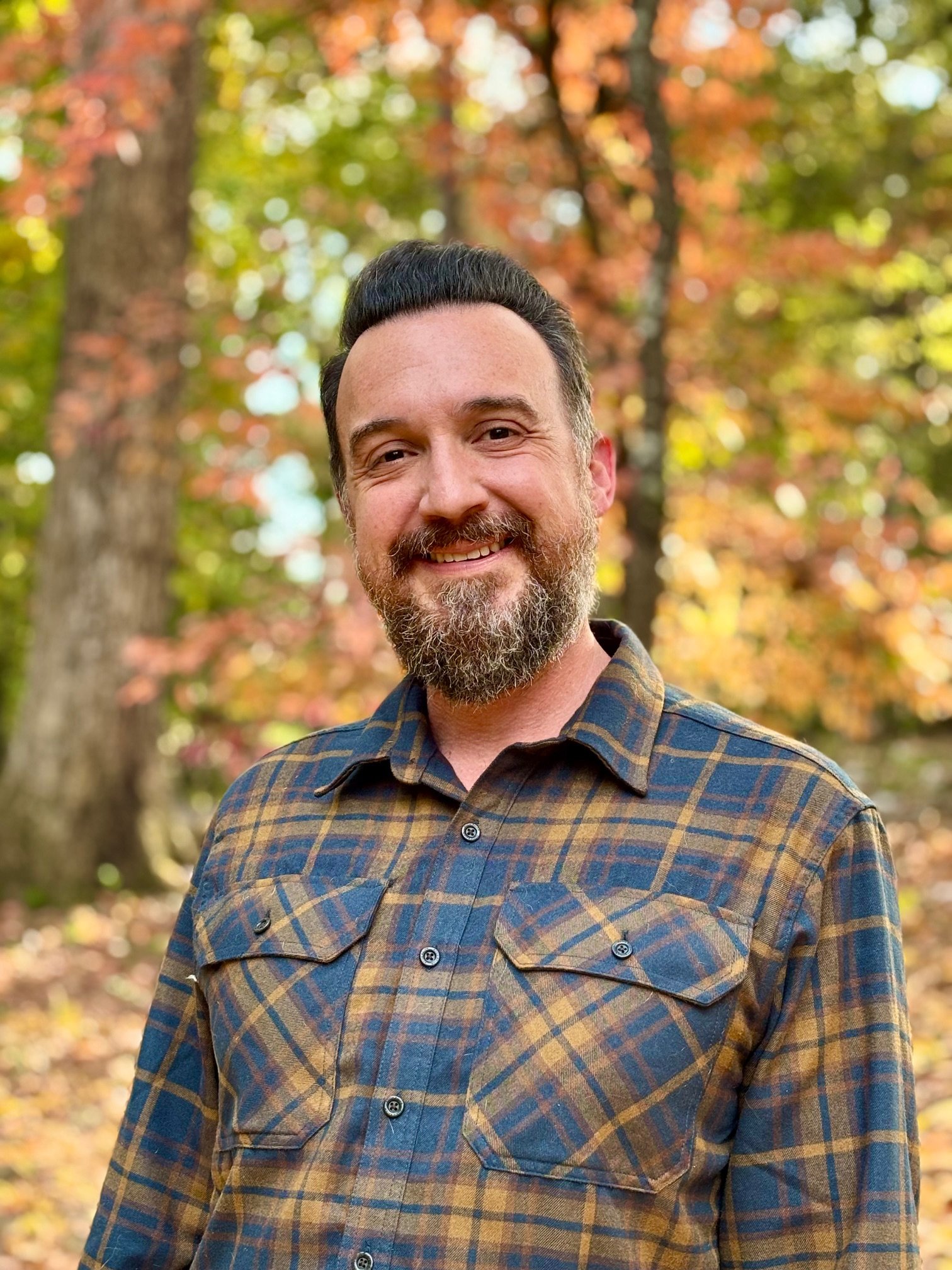
Master’s degree in Clinical Mental Health Counseling, Auburn University Montgomery
Master’s degree in Divinty, Duke University
Bachelor’s Degree, Religion, Birmingham-Southern College
Associate Licensed Counselor, under the supervision of Emily Kay Plank, LPC-S
“Who looks outside, dreams; who looks inside, awakes.”
I grew up in northwest Florida and completed my undergraduate studies at Birmingham-Southern College, where I earned a degree in religion. My academic focus there was not on belief or doctrine, but on how human beings across cultures use story, symbol, and ritual to orient themselves to suffering, change, and the unknown.
This interest led me to graduate study at Duke Divinity School, where I was immersed in the study of myth, narrative, ethics, and the care of persons during times of crisis and transition. Depending upon the needs of clients, my clinical work encompasses both the spiritual and the secular. This training continues to inform how I listen—particularly my attention to symbolic language, existential questions, and experiences that do not easily fit into purely rational frameworks.
I later completed a Master of Education in Counseling at Auburn University Montgomery, where I received formal clinical training and began integrating depth-oriented perspectives with contemporary psychotherapy practice. This degree culminated with.an internship working in the Counseling Department at Columbus State University.
In addition to my work as a therapist, I also serve in a pastoral role within the United Methodist Church. This role is distinct from my counseling practice and does not shape my therapeutic orientation. I mention it here for the sake of transparency. My work as a psychotherapist is grounded in depth-oriented clinical practice, and I welcome clients of all belief systems, including those who identify as spiritual, religious, agnostic, or nonreligious.